 |
|
|
|
Home > Health > Animal care > Animal care activities |
Animal care activities |
|||
|
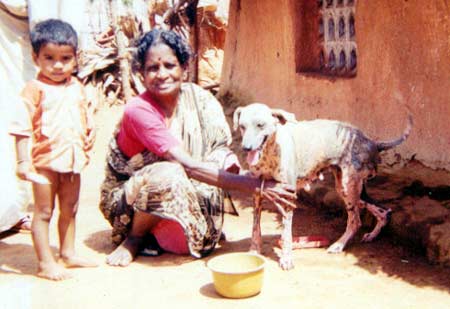
Aurovilian Merry from Germany, who joined Auroville several years ago, is an active member of Auroville's Animal Care Group and the following page is based on her hands-on reporting: What we doMost of our patients are dogs, but we also treat cats, goats and cows. By improving the health of the animals, the risk of people becoming sick is also lessened, particularly from rabies, which is deadly both to animals and to humans. In the past year many dogs have been vaccinated against rabies. Other diseases we try to combat are parasites, distemper, and venereal tumour in females, as well as the condition of maggots (fly larvae), which literally eat on animal's living flesh once eggs are laid in an open wound. Having male dogs and cats neutered reduces the possibility of maggots because of less fighting. It is also an important factor in preventing offspring and controlling the animal population. The treatment methods are preferably homeopathic and naturopathic (ayurvedic), sometimes allopathic as well. Research and experimentation with new treatment methods are an important part of the work. Ann, our main fieldworker and 'motor' of the Animal Care group, grew up in New Zealand. She, with the assistance of her Tamil partner, is busy all day and often far into the night, taking care of the local animals, mostly dogs. They are looking for a method of population control that does not involve removing parts of the body, like neutering does. Dog behaviourThe life of domesticated animals here in India is very different from the western countries, especially for dogs. In general the dogs in the village (and many dogs in Auroville as well) have complete freedom. Usually no one teaches the village dogs anything, but they respond to their names and to the people who feed them. Sometimes they protect their home from human intruders, but generally they seem to be more responsive to other dogs than to people. Most of them are shy. Maybe partly due to the fact that in the villages it is not uncommon that dogs are getting a kick or a stone thrown at them when they're in the way. But they can quickly become friendly -usually too friendly- in spite of barking noisily. With other dogs they are not so tolerant. They are fiercely territorial, though they sometimes share large areas in a pack. In fact they seem to enjoy very much running about with their peer group or battling with their favourite enemy. Once I observed an exception to this territorial behaviour; in fact, against all the rules of the game there seemed to exist a genuine friendship between one of the more 'civilised' dogs where I was staying and a stray dog from a completely different area. Our dog tolerated no strange dogs on his territory - except this one. For him he would sit and wait and when he came for a visit, our dog would let him jump over the cactus fence and they would greet one another joyfully. I also saw them together on the other dog's territory. In fact, I think this particular stray dog was quite special. When his mate had puppies, she let them nurse but otherwise paid no attention to them. It was the 'daddy' who seemed to be responsible for their 'education. They were always with him, not with the mother dog. Living with the animalsVolatile and extreme as the mentality here sometimes is, there are also cases of great love and kindliness to the house animals. I used to pass by a section of a village with some extremely poor huts. Goats and cattle as usual were roaming the streets, nibbling bits of dry twigs or garbage. In front of one hut-no veranda, dirt floor only- stood every morning a half grown calf; his glossy coat shining clean, his tail looking like it had been combed. At his feet was always a little pile with hay and a tub of water. He looked like he was going to win a prize. People also sometimes fondle and play with their cats and let them sleep on the beds like in the West. Once in a black stormy night Ann was called into a house in the village. The dog with name Gobi was lying in front of the fireplace together with a calf and other family animals. He had almost no more hair. Due to the skin disease he was stinking awfully. She asked the couple that had stayed up all night with the suffering dog whether they did not mind. "What to do?" said the man, "He is our child." Long-term goalsActually, we have only one goal: to enable every animal to live happily, to be healthy, well fed, and loved. One of Ann's main objectives is to have enough funding to be able to employ several animal loving, reliable locals (Tamil people from the surrounding villages) on a regular basis to follow up on treatments, help find homes for puppies and kittens, and report cases which need veterinary attention. Another is to continue and improve reduction of the dog population. We also need a practical method of becoming accessible to more villages surrounding Auroville, either by a rolling dispensary of some kind or a clinic where animals can be brought for treatment. Then there is the ongoing research and experimental work with some of the local vets in Pondicherry.
If you would like to get further information about Animal Care Contact: shivaya@auroville.org.in
|
|||
|
|
|
|
Health > Animal care > Animal care activities |
| Auroville Universal Township | webmaster@auroville.org.in |   |