 |
|
|
Taking care of disabled children |
|||
 |
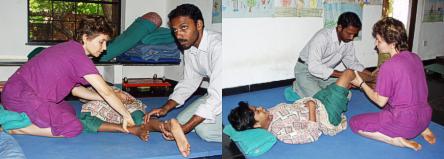
At the Auroville Health Centre, a team of five people is taking care of disabled children from up to twenty surrounding villages. The disabilities most often encountered are polio-related, mental and general retardation, hearing problems, muscular dystrophy, cerebral palsy, infantile hemiplegia and epilepsy. BackgroundMany of the children are from poor families who find it very difficult to take care of a disabled child. There is no financial help, and there are no nearby schools for handicapped children. Transportation is also difficult. Challenges
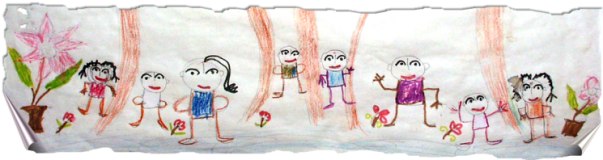
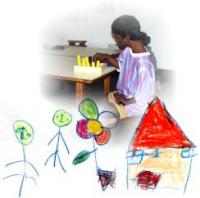
The work is manifoldAt the Health Centre we have a beautiful, large, and nicely equipped therapy room where we do physiotherapy and other activities with the disabled children. Some of the children of nearby Kuilapalayam village attend our programme daily, while others from further away are brought for treatment by their parents on special days. The team's physiotherapist and rehabilitation worker regularly visit the children of the faraway villages at home. Recently we started arranging for several children from faraway villages to be transported to the Health Centre. At least twice a week they stay in our therapy room for one morning or afternoon. This has been a big success. The children come clean and motivated, and are accompanied by one parent or grandparent who gives special time and participates. The children are happy to get out of their homes and do exercises in the company of other children. The treatment is much more effective than it would be in their homes. Basic educationFor most of the children the main focus is on physiotherapy exercises, according to their handicap. Other tools are educational games, and toys and handicrafts. We are not able to replace schools, but we try to teach them basic skills, social awareness and the activities of daily life. After some time most of the children know the basic colours, shapes and counting as well as such fundamental things as washing their hands before eating, brushing their teeth and using the toilet properly. They receive a healthy and nutritious snack, and if needed we provide aids such as adapted shoes, splints and calipers, or we bring children to specialists and arrange for surgery and aftercare. A joy to work with themDespite their disabilities, many of the children we are working with have an extremely beautiful inner nature, and it is a joy to work with them. Over the years many children have profited from our programme and we have seen several children become independent of our help and join the local schools or start work or training. All the children we are working with over a longer time are progressing. Need for people and facilitiesThe team needs to have more trained and dedicated people in order to build up more centres in the remoter villages, so that disabled children there can be taken care of as well as those attending the Health Centre. Our greatest aspiration is for the provision of full training facilities for disabled people, so that a combination of training, work and exercises can be provided. For further details, contact the team's occupational therapist Angelika |
||
|
|
|||
|
Health > Care for disabled children |
|
|
|
| Auroville Universal Township | webmaster@auroville.org.in |   |