|
June '02
"Chart out
a new economic course"
An interview with Henk Thomas and Manuel
Thomas
- by Carel
AVToday: You
mentioned during your presentation of the White Paper that there is
insufficient motivation for Aurovilians to go into business. What are
the reasons?
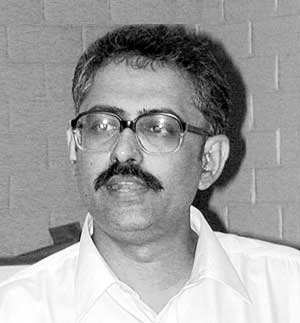 Manuel: There is a
feeling in Auroville, as shown in our case studies, that working in a
commercial unit is something not very laudable. If you are working for a
service unit, then you are doing something better. Even newcomers are
stimulated to work in the service sector instead of in commercial units.
But this is ridiculous as much of the work a service unit is doing is
identical to what a commercial unit is doing. The distinction between
commercial and service units has to be reviewed and the negative
attitude towards business has to change. Manuel: There is a
feeling in Auroville, as shown in our case studies, that working in a
commercial unit is something not very laudable. If you are working for a
service unit, then you are doing something better. Even newcomers are
stimulated to work in the service sector instead of in commercial units.
But this is ridiculous as much of the work a service unit is doing is
identical to what a commercial unit is doing. The distinction between
commercial and service units has to be reviewed and the negative
attitude towards business has to change.
Henk: The motivation
for entrepreneurship in Auroville is different from elsewhere. There is
no personal ownership, and there is no personal profit to be made from
running your unit better. As that financial dimension doesn't exist,
there is a need for some other kind of reward, social prestige or
appreciation by the community. 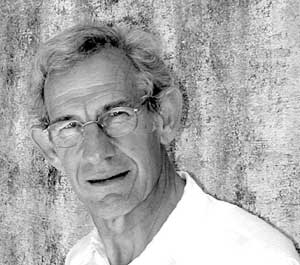 But in Auroville, the contrary has
happened. Till the mid-1990s, the atmosphere towards business was
strongly negative. It has improved since, but by far not enough. The
interviews with business executives reflect the same perception: 'there
is a hostile attitude, there is no appreciation, we are just the
milk-cow for the community.' But in Auroville, the contrary has
happened. Till the mid-1990s, the atmosphere towards business was
strongly negative. It has improved since, but by far not enough. The
interviews with business executives reflect the same perception: 'there
is a hostile attitude, there is no appreciation, we are just the
milk-cow for the community.'
Added to that is the
maintenance problem. If an executive draws say Rs 12,000/month from a
unit, s/he is confronted with an increasing number of people working in
service units who have to do it with only Rs 3,500. What to do and how
to feel? The discrepancy is difficult to accept. Further lowering of
one's own needs neither contributes much to the overall problem nor is
felt to be fair. In their view the collective/public sector of Auroville
lives beyond its means: there are too many service units, and the level
of maintenance is mostly unacceptably low. All this poses fundamental
dilemmas.
Manuel: Look at the
change in the attitude of the Indian government towards business during
the last 50 years. In the initial years after Independence, the attitude
was that making profits was bad, that business was a necessary evil.
They were taxed at 60-70%.With wealth tax included, the highest rate
went up to 90%! This killed initiative. And there was a protective
market, and only a few large groups thrived. After globalization, the
whole thing has changed. Businessmen are rewarded and given importance,
the finance ministers make a lot of noise about promoting business,
especially after the IT boom started. Prime ministers and businessmen
coming from abroad visit Bangalore, not Delhi. Things are changing.
Businesses have to be recognized as providers of employment and economic
value to the community.
So what are the ways
to stimulate budding entrepreneurs?
Henk: Firstly, build
up trust and change the negative attitude towards business. I don't
believe that there are no entrepreneurs in Auroville. In Slovenia, 10
months after the Berlin Wall had fallen, 87,000 people had started new
businesses. These were the same people who refused to do any such thing
before. Auroville can also do this, but it will have to pull down its
own 'Berlin Wall'. Secondly, actively support and stimulate people to
start businesses.
Manuel: You'll have
to do a lot of creative thinking about how to stimulate promote commerce
and industry. For example, how can access to capital be made easy? You
could consider approaching the State Bank of India (SBI) for a loan
facility of say Rs 50 crores, against a guarantee for repayment of
interest and capital by the Auroville Foundation. Loans could then be
extended to a unit with the approval of the relevant Auroville body, say
the FAMC. In view of the special nature of Auroville, the SBI may even
be willing to negotiate a lower rate.
Another way would be to
create an Auroville Investment Fund, as part of the Auroville
Foundation. This Fund could even draw grants and donations from outside
to make up its core capital. But it would have to be absolutely
professionally managed; the people cannot allow themselves to be
softhearted, which is a common difficulty in small communities.
Henk: In respect of
financing, the role of the Auroville Foundation should be looked at. So
far, the Auroville Foundation has not done anything more than to allow
new business units to get established as part of one of its trusts. But
it is up to the unit executive to bring his or her own money into the
unit by way of donation or loan, or borrow from friends, and take the
full risk for any losses, while the Auroville Foundation is in fact the
ultimate beneficiary of what the commercial unit brings in. But so far
the Foundation has been sitting on the fence, while it could stimulate
business by standing guarantee for loans.
Manuel: Another
question to study is how venture capital can come into the Auroville
business scheme. At present, there is no possibility for joint ventures.
An outsider who would like to support an Auroville business can only
give loans directly, for which the unit would need the permission of the
Foundation. He cannot participate in share capital as would be normal
outside Auroville. But it is through joint ventures with outsiders that
the required capital can be supplied. The Trust system doesn't allow for
this. You would need a corporate entity in which the Foundation owns 50%
or more and the outside entity the balance.
Henk: Auroville is
not the first or only institution that struggles with this type of
problem. I have experience with the Mondragon Cooperative system in
Spain. They too reached a point where they had to solve the question of
how to interact with the outside world, and draw the outside world in.
It is always possible with lawyers to find solutions that are not
blurring the ideology.
During your
presentation, someone observed that there are three pillars of
Auroville's economy - commercial, grants and individual monies - so that
a defect in the commercial pillar is not so serious after all.
Henk: I take a
different view. The presentation has shown that the commercial sector is
a cause for worry. It is not a healthy proposition to depend on grants
and donations or on individual money.
Take the Centre for Urban
Research, for instance. This 1.5 crore (US $ 300,000) building is
created from grants and donations. But 80% goes into building materials
and local labour, which is a cash flow into the surrounding economy. But
for how many Aurovilians does such a project provide maintenance? Only a
few, so the net impact of this donation is very limited for that aspect
of Auroville's economy. Or take the recent Asia-Urbs conference that
Auroville organized. How much money flows back into Auroville itself,
how much into hotels in Pondicherry etc.? Grants and donations are all
very well and necessary, but they generate only a limited so-called
"value added" that contributes to building an economic base
for the expanding township. In contrast, if you look at the commercial
units, the estimate is that they employ about 150 and 225 Aurovilians
directly, who benefit their families and a far larger number of
employees from the surroundings on a permanent basis. (By the way, as we
do not know the exact figures, it would be good if Auroville would keep
statistics about how many employees and Aurovilians work in a unit at
the beginning and the end of each financial year.)
When we talk about
individual monies, we have also to be careful. What we mean is that an
individual doesn't depend on the community (so doesn't take money from
the community in the form of maintenance or salary or so) and provides
voluntary work. That, by itself, is great. But it also shows that some
units, particularly service units, could not function without this free
work. And that is another cause for worry.
So one can't really speak of
three pillars of strength. The commercial pillar is weak. The pillar of
grants and donations may undermine an economic structure of
self-sustainability because one gets used to a culture of fostering
grants and donations. And the pillar of individual monies, though
impressive, indicates the failing of the community to sustain itself -
services that depend on this source should realize that they might
become bankrupt as soon as this source drops away.
You have argued that
'Auroville' is an excellent brand name. Could you explain this?
Manuel: The brand
name 'Auroville' stands in India for high quality - the positive aspect
- and for above average price - the negative aspect. Consequently,
Auroville's market is the niche market in the upper Indian middle class.
If prices are slightly lowered, the turnover might increase drastically.
Henk: But you need to
monitor the use of the brand name. At present it enjoys goodwill. But it
is not a guarantee for tomorrow. If there is a scandal in a newspaper
about one of your products, it would damage the brand name beyond quick
repair, and there have been cases where Auroville products were
rejected. So this brings in the need for standardization of product
quality, and once again, the need for a body to help small units to meet
the minimum levels of standards in product quality, packaging etc.
Manuel: In this
respect we should mention that Auroville businesses have an excellent
social policy, probably because of Auroville's ideology. Employees can
attain higher standards of living, there is interest in providing them
with training, and the motivation of people and the working conditions
are good. Here Auroville leads the way. It is not hire and fire, and
some unit-executives even experience a personal trauma when they have to
lay-off workers, as happened recently.
You mentioned that
there are quite a few units that are actually loss- making.
Manuel: Yes, there
are. But before passing judgment, one should investigate why a unit
makes losses. Is it because of lack of access to capital, or because its
products have become obsolete, a lack of marketing, a deficient pricing
policy? Auroville needs a group authorized to identify loss-making units
as the negative signals emerge, and assist them. If you can't find a
solution, close the unit. That may be hard, but probably it will be half
as hard as a postponement and having to close the unit later at far
higher costs.
Henk: Our main point
is that there is not a single commercial unit in Auroville, except for
Maroma, where one can speak of a strong economic and commercial
position. Also, no group exists that does strategic planning of
business, studies sectors and comes forward with proposals.
Looking from outside,
do you feel that Auroville is hampered by its high ideals?
Manuel: No. It is the
ideology that made you come here in the first place. I admire the fact
that Auroville has been able to be together for this length of time. I
do not have a negative outlook, but see negative tendencies perhaps more
clearly than those who are part of the community. But the ideology
should allow you to do things better - not hamper you.
Henk: I have been
coming to Auroville almost yearly since 1990. I have noticed that the
relative isolated and introverted position of Auroville, which I
observed in 1990, has changed enormously. Today you talk about the
bio-region instead of Auroville; there is the international seed-saving
program; there is the world interaction with Asia Urbs; you are trying
to create a new internal organization learning from what the outside has
to offer you, while there are not that many models in the world that can
serve as a mirror for Auroville.
But the economic area is not
in a good shape, and there you have to concentrate on bringing it up to
standard. This requires rational thinking.
Also, you have to have a
close look at the motivations of the people who join Auroville at
present. It is normal in movements such as Auroville that the first and
second generation are very motivated, but that the third generation has
different expectations - in the sense that they take for granted what
Auroville offers to them, not realizing sufficiently what efforts were
needed in the past and what is required of them to sustain and expand
Auroville as a growing township. Then there is an influx of retired
people who may not be planning to put in the work that is necessary.
You stated that Auroville
cannot allow itself the luxury to experiment with 'no-money economy'
models.
Henk: At present
Auroville lacks the basis to form its own internal money economy. I
guess that only a township of say 30-40,000 people can provide the base
to experiment with internal exchange models. At present, in view of the
economic uncertainties, Mother's "no-exchange of money"
economy is definitely a bridge too far.
The best book I have read on
alternative money systems is by Bernard Lietaer. He recommends
introducing complementary systems, systems in addition to existing ones,
not substituting them. But I cannot see how that could work in
Auroville.
Is this White Paper
the final word on the commercial units' performance?
Manuel: No. The White
Paper is only an interim document, which mainly concentrates on the
performance of the commercial units. In about six months we hope to
present the full research study, which will include other material and
also some fresh recommendations on the basis of the observations that we
received during our presentations. Also, we would like to incorporate
the financial results of the year 2001-2002. We have seen a downward
trend in the last few years. If there is an upswing, that would be a
relief.
Henk: But we are
rather afraid we will see that the down-swing has continued, also in
view of the September 11 after-effects, as it has done everywhere in
India. If this is the case, it will mean a severe reduction in the level
of the contributions the units will be able to make to the Central Fund
- also in view of their previous losses - and that may mean that the
Economy Group will have to cut expenses in the service sector instead of
providing the increases which many consider absolutely necessary.
That is a sobering observation since a sustainable township is not
possible without a sound and sizeable commercial sector.
|