|
|
|
|
(From an article based on an interview with Peter Anderschitz on the
design of an urban cluster in Auroville)
"A building language was developed, based on
certain criteria that would repeat themselves again and again,
responding to the need for close living, yet fulfilling the more
individual needs.."
The real struggle in any search for new patterns
of urbanisation is to derive a relevant concept of habitation. The
solution quite clearly lies in collectivity. What is not so clear is how
to introduce new patterns with smooth transitions, so they can work in
co-existence with the older ones.
To study changing patterns in relatively new township experiments like
Auroville is a challenge. Especially as the town was conceived by the
Mother with the intention of presenting the ideal township rooted in
collective living. In her own words: "A new creation beginning with
a model town and ending with a perfect world."
Auroville is located in Tamil Nadu, some 10km
north of the union territory of Pondicherry. This 1968 galaxy concept of
town planning was visualised by French architect Roger Anger and his
team, encapsulating an anticipated population of 50,000 in an area
approximately 2.5km in diameter.
Accommodated in a dynamic spiraling movement are
four distinct zones - the residential, industrial, cultural and
international. As directed by the Mother, they evolve harmoniously from
one to another around the centre, containing Matrimandir, the soul of
Auroville, and its 12 radiating gardens. The central ring road or crown,
along which all services are to be arranged, is to be the main
distributor, the pulse.
Encircling the township, as a protective barrier against dust, noise and
external interferences, is an extensive dense forest, the green belt.
The guidelines for the high-density residential
development were planned in the form of several curvilinear structural
outlines; 500-600m stretches of housing with varying densities in a
sloping arrangement, dropping gradually uniformly from 18 floors at the
higher end to around three. Whether this idea is applicable today in
Auroville is debatable, though the zoning and circulation structure are
well recognised.
That living patterns will swing variously during
the adjustment to a growing number of inhabitants and newer definitions
of their aspirations is well anticipated. First living experiments of
community settlements had to be conducted at the outskirts of the
township in order to study them under the test of time. Through such a
series of designs, more appropriate solutions for actual execution in
the model town are to be evolved. As it is, all the land belonged to
Auroville and to no-one in particular.
The early community engaged in extremely close living, sharing almost
every space and facility, with little consideration for individual
needs. Auroville now experiences a growing peripheral, sub-urban
development of highly individualistic lifestyles. More and more
individuals have opted out of the collectives into their own,
self-expressionistic houses; not finding answers in the vacuum of the
much awaited organised structure.
The individualised trend towards housing, with houses cropping up
haphazardly, was clearly undesirable and detrimental to the development
of the town. Housing solutions had to be directed towards more relevant
community living.
"…A new statement towards the urban pattern
of built up space.."
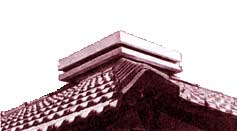
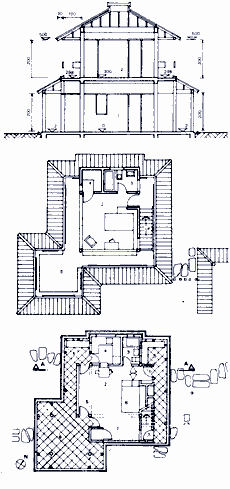
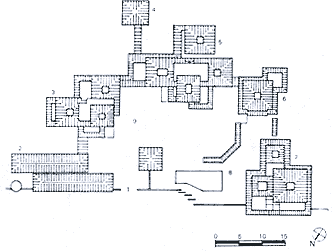
The first effort towards building a more 'urban'
settlement, Samasti,
now stands as a new statement in Auroville towards the urban pattern of
built-up space. A positive outcome is that it shows what could be a
tangible massing, apart from details and aesthetics in terms of
collective living and going forward towards higher density. In that
sense it is a stimulant, an inspiration..
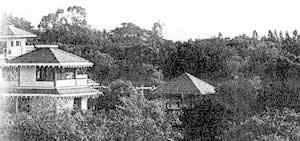
In another sense, being very spacious for such few
people, it doesn't hold much meaning for the city to come. Then again it
was a special case of artistes, each needing their own work and
expression spaces, integrated within their living areas.
It was not meant to stand as a model for a standard of living, which is
rather high here.
As a stepping-stone, then, and the next step?
To move further and further away from readymade architecture, towards a
building system that involves more actively its users designing their
own spaces. To find appropriate organisational patterns… particularly,
financial… making the architect, planner and contractor act as guides,
advisors and consultants.
Otherwise it gets just like the wild developments in the city, where the
one with the biggest elbow shovels his own way, blocking other
developments. It blocks the growth of a common building language based
on certain materials and patterns for built-up and open spaces, for
concept of a growing house and city. Away from the rigid planning
approach with the architect, the all powerful visionary..
Instead merely drafting the main outlines
regarding spaces, their inter linking communications… leaving in
addition to the bare minimum spaces that are informal play-fields for
self-expression.
Do it yourself is what's been happening at Auroville, but not in
response to neighbours and a vision of the larger whole, creating only
problems by getting into shells and lacking communication. One pays for
such a spread out infrastructure, and now there is an urgent need to
organise the guidelines for the development and growth of community
living, and to concentrate on the very meaning of Auroville, find its
centre, and grow from there.
Adapted from an article by Anupama Kundoo,
published in 'INDIAN ARCHITECT & BUILDER', January '91
|