        |
|
|
The Colours of Nature |
|||
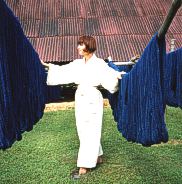 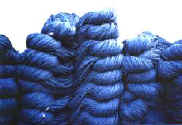 |
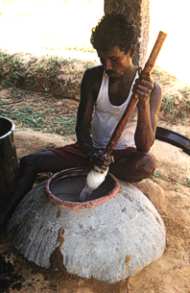
In 1992 some Aurovilians working with textile felt the necessity to create a source of colours that would be more respectful towards the environment. In this way arose... The Colours of Nature (TcoN)Research all over IndiaThe Aurovilian founder of The Colours of Nature, Jesus Ciriza Larraona, went years ago to Kashmir to produce silk carpets. Not attracted by synthetic colours, and disappointed by the polluting natural dyeing methods he witnessed, he started to collect information from all over India on traditional dyeing techniques, thereby discovering methods of dyeing dating back several centuries, when heavy metal salts and other polluting substances within dyes were not used. The few masters still alive, and some old books, provided a basis for his knowledge. The unit started as an R&D unit and developed itself steadily as a natural dyeing company, manufacturers of natural dyed textiles for garments & interiors. The Colours of Nature is one of only few remaining natural dyeing units in the world, who are entirely focused on an environmental friendly, vegetable dyeing process. Their research in natural dyes is ongoing. The unit's specialisation is the Natural Indigo Fermentation Process. The processThe tradition of natural dyeing has almost been
lost. This age-old process requires a particular attitude and special
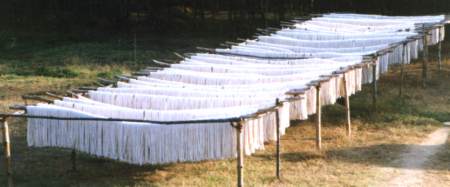
skills. First, the yarn is washed in water. To avoid the use of caustic
soda or any kind of chemical-synthetic soap, a special kind of soap with
a high degree of alkalinity - traditionally used by washermen in India -
is dissolved in the water. Afterwards bleaching is achieved purely by
using the effect of sunlight. Extracts from the flowers, fruits and
leaves of plants and trees are used in the dyeing process. These are
non-harmful to human beings, and many of them are found in ayurvedic
medicine recipes, another ancient tradition. Therefore it is possible to
say that these materials used in the dyeing process have beneficial
effects. Integrating ancient and alternative technologies
Environmentally friendlyThe so-called 'green' textiles have become elite products in the developed world, with the organic cotton industry as a major leader in this process. However, more and more dyeing and tannery units are being forced to stop their activities, due to their polluting production process. Though the words 'vegetable dyeing' may sound very 'sound', often vegetable dyeing is not environmentally friendly. The Colours of Nature concentrates on that aspect of vegetable dyeing which is environmentally friendly. For instance, the water coming from the dyeing is first - before being returned to nature - treated via an effluent treatment plant. Moreover, the unit uses a fermentation process which is the most environmentally sound process for indigo dyeing. It consumes less water than other indigo dyeing methods: no fixing agents are required and the process doesn't use hydrosulphite. By reviving this dyeing method, The Colours of Nature shows that environmentally friendly indigo dyeing for industrial purposes (medium bulk) is possible. (It may be interesting to note that the Indigo Fermentation process has already been in existence for more than 7,000 years!) (The internationally acknowledged inspection body Skal certifies The Colours of Nature dyeing methods.) The plantCultivation of the plant 'indigo ferra tinctoria', a leguminous plant, occurs on dry land (waste land) and via crop rotation. In the range of natural dye colours, indigo is one of the most 'fast' colours, and is certainly in this day and age one of the more popular colours in the world, highly appreciated for its ageing quality. The mysteries of birth, flowering and return to the earth are easily reflected in its gradual tone shifts. The Colours of Nature hopes to reach out from Auroville in an initiative that is dedicated to social improvement and environmental awareness. Ultimately The Colours of Nature will become a learning centre where all aspects of the natural dyeing process will be researched and developed. For further information, contact colnature@auroville.org.inWebsite: http://www.thecoloursofnature.com/ |
||
|
Research > |
|||
 The Colours of Nature intends to take a
holistic approach to the use of natural dyes, integrating all aspects of
the process. From archaeological discoveries we know for certain that
civilisations of Central Asia, China and South America were using dyes
of organic origin 5,000 years ago. For many centuries an important
sector of world agricultural production was dedicated to the provision
of raw materials for this industry. In 1856 Sir William Perkin
discovered the first synthetic colouring: malvein. Synthetic dyes were
simpler and less costly to produce, so the rich tradition of natural
dyes was gradually lost. Agricultural production of raw materials
practically ceased. Nowadays, with perhaps the exception of indigo,
dyeing plant crops are non-existent. Thus anyone who intends to create a
real alternative to the synthetic dye industry has to consider the
growing of all vegetable matter for the extraction of natural dyes. The
Colours of Nature is currently researching this area, and intends to
encourage local farmers to cultivate, organically, cotton and dyeing
plants and undertake afforestation with trees of the same kind. At the
same time we will endeavour to integrate the old traditions with new and
alternative technologies.
The Colours of Nature intends to take a
holistic approach to the use of natural dyes, integrating all aspects of
the process. From archaeological discoveries we know for certain that
civilisations of Central Asia, China and South America were using dyes
of organic origin 5,000 years ago. For many centuries an important
sector of world agricultural production was dedicated to the provision
of raw materials for this industry. In 1856 Sir William Perkin
discovered the first synthetic colouring: malvein. Synthetic dyes were
simpler and less costly to produce, so the rich tradition of natural
dyes was gradually lost. Agricultural production of raw materials
practically ceased. Nowadays, with perhaps the exception of indigo,
dyeing plant crops are non-existent. Thus anyone who intends to create a
real alternative to the synthetic dye industry has to consider the
growing of all vegetable matter for the extraction of natural dyes. The
Colours of Nature is currently researching this area, and intends to
encourage local farmers to cultivate, organically, cotton and dyeing
plants and undertake afforestation with trees of the same kind. At the
same time we will endeavour to integrate the old traditions with new and
alternative technologies.