 |
 | |||||||||||||||||||||||||||||||||||||||||||||||||||||||||||||||||||||||||||||||||||||
|
|
| ||||||||||||||||||||||||||||||||||||||||||||||||||||||||||||||||||||||||||||||||||||


   |
 | |||||
|  PIII p9 |
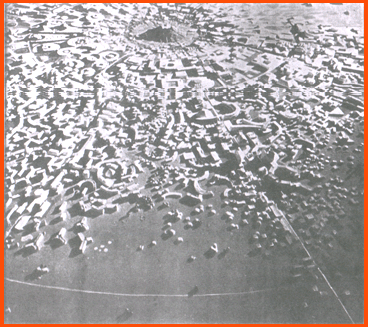
Next to a perspective of the central area the text went on to say:
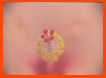
"At the center of the town, the Park of Unity is formed by a crown of gardens overhanging the lake which surrounds the Sanctuary of Truth with the Matrimandir. The Sanctuary of Truth by its form and position, will be the heart of the town, the dominating point of Auroville opening to the Light." | |||
|
|||||
|
Note:This configuration of the central area expressed in the models above, which the Mother had elected in March 1966 and which were published in the UNESCO brochure the same year is very clear: From the outside, the gardens of Unity overhang a circular lake which surrounds the central island of the Sanctuary of Truth, at the heart of which stands the Shrine of the Mother. |
|||||
 PIII p10 PIII p10 | |||||
🆕 We have a new website! Visit us at
https://auroville.org/
for the latest news and information about Auroville.