 |
 | |||||||||||||||||||||||||||||||||||||||||||||||||||||||||||||||||||||||||||||||||||||
|
|
| ||||||||||||||||||||||||||||||||||||||||||||||||||||||||||||||||||||||||||||||||||||


   |
 | |||||
|  PV p4 |
In the early seventies, the first trees were planted in the area - and rows of casuarinas to provide wind breaks. Between all those directly involved in the work by mutual agreement a working-plan was eventually evolved which served as the basis for all development of the area from that time up until the present time | |||
| |||||
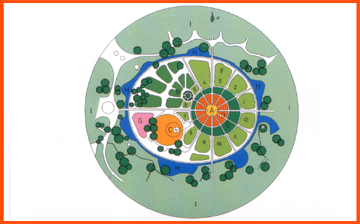
This working-plan, with variations over the years, was the reference for Piero, who was supervising the actual construction work, as well as for Narad and for Roger. It shows the oval island enclosing the inner gardens, and a simple water channel of about 7 - 12 meters wide separating it from the outer gardens or park area, as it was not thought possible to create a wider body of water in the prevailing physical conditions. | |||||
| |||||
 PV p5 PV p5 | |||||
🆕 We have a new website! Visit us at
https://auroville.org/
for the latest news and information about Auroville.